Gallery
See it running
Every demo below runs in the browser - no install, no clone. Open one and start clicking.
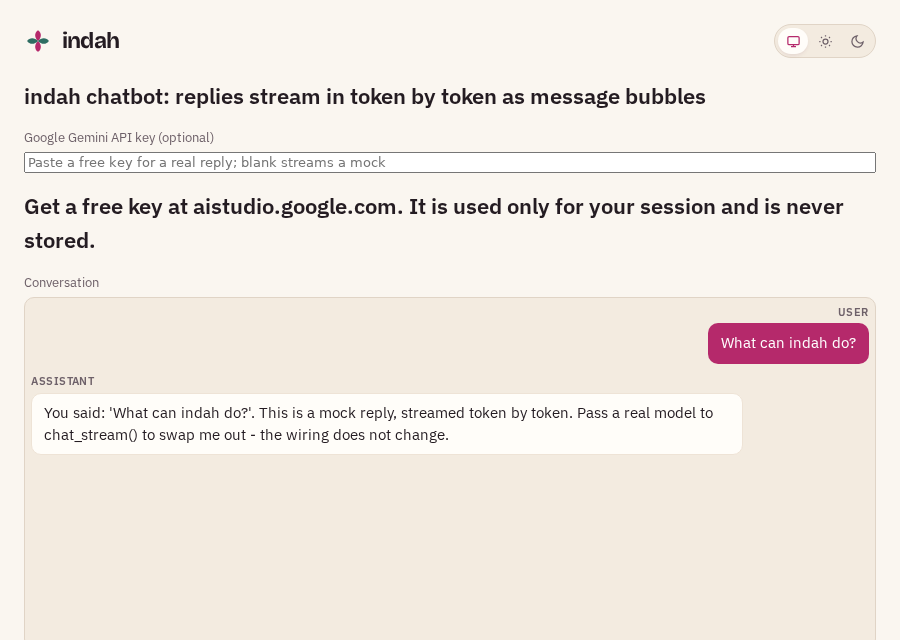 Streaming chatbotChat replies streamed token by token into role bubbles.
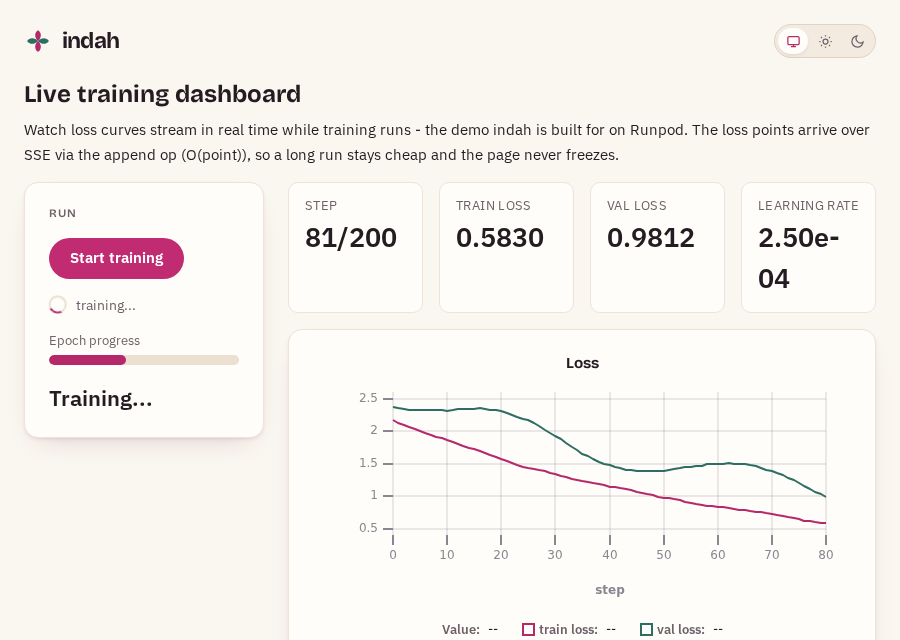 Live training dashboardLoss curves and live KPI cards while a model trains.
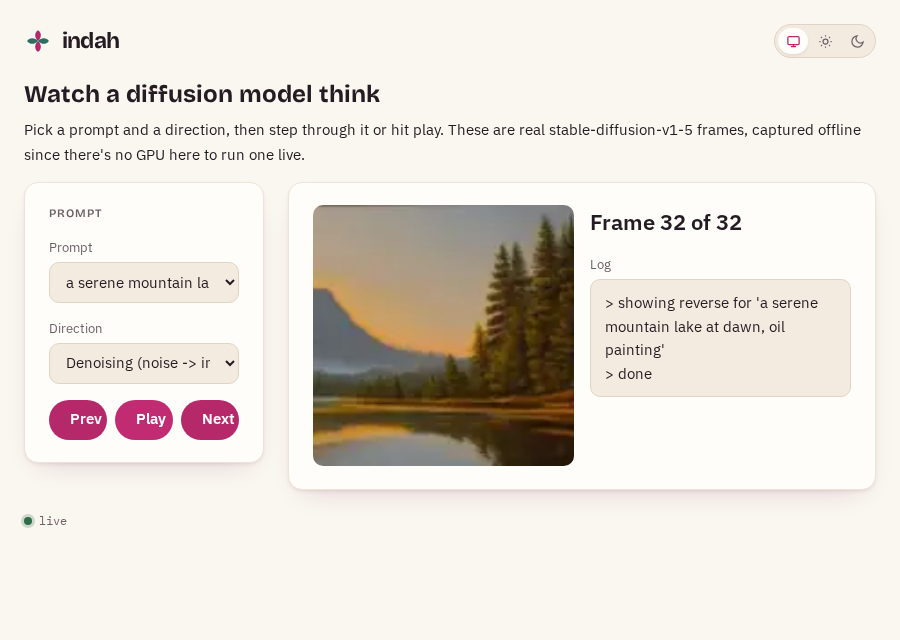 Image generationA prompt-to-image sampler refining from noise, with live progress.
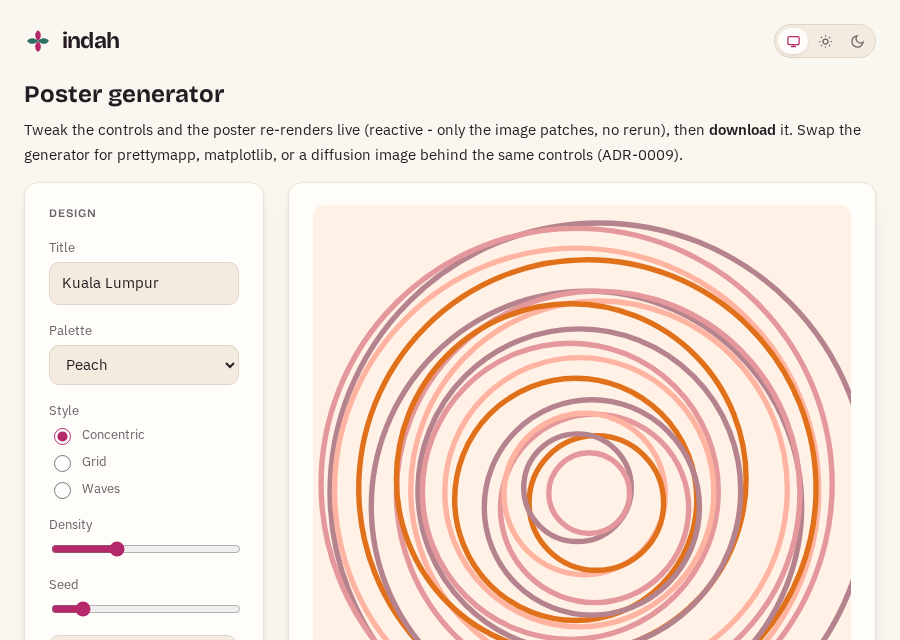 Poster generatorTweak controls, watch a poster re-render live, then download it.
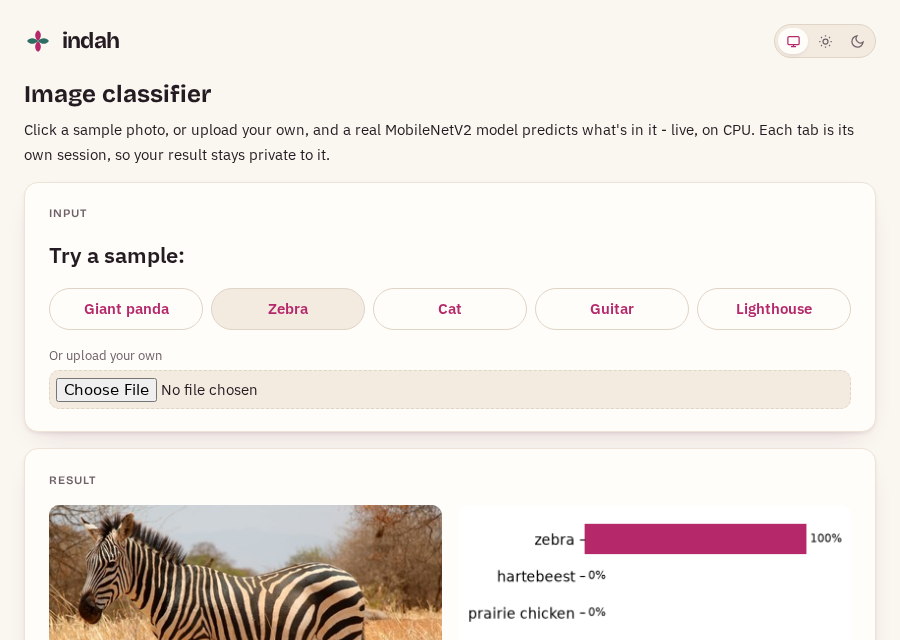 Image classifierPick a sample photo or upload your own, and see the top predictions.
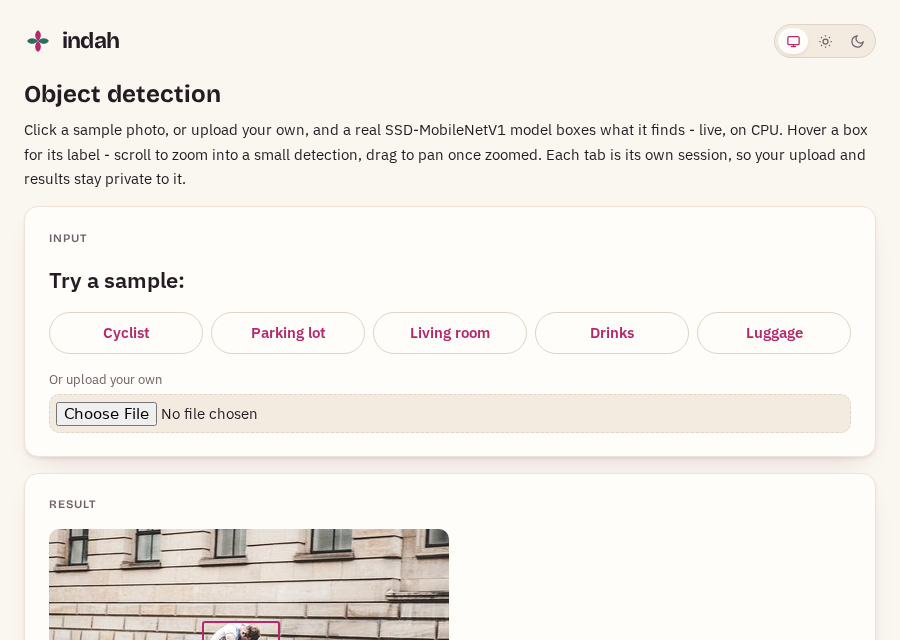 Object detectionPick a sample photo or upload your own; hover a box for its label.
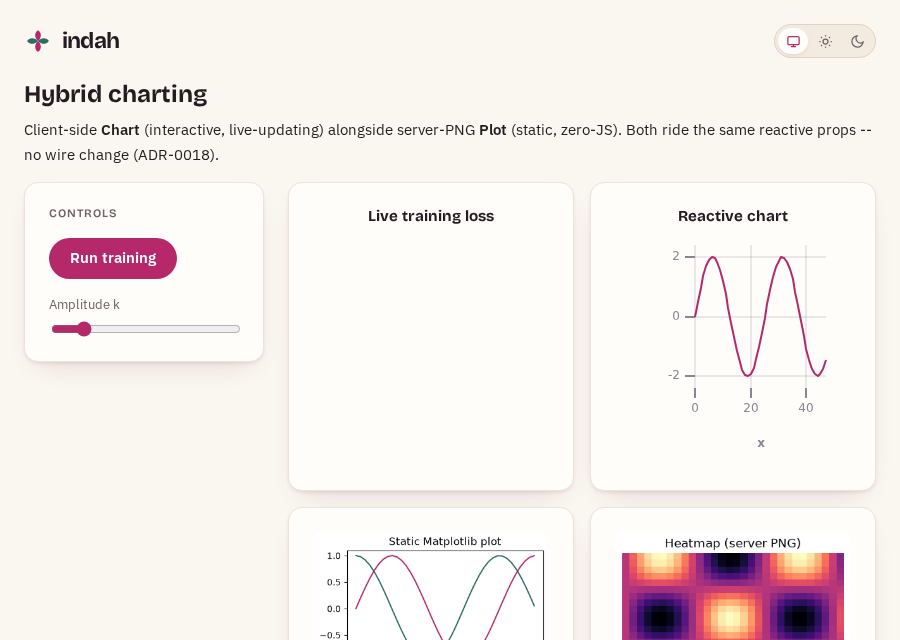 Hybrid chartingAn interactive client chart beside a server plot and a heatmap.
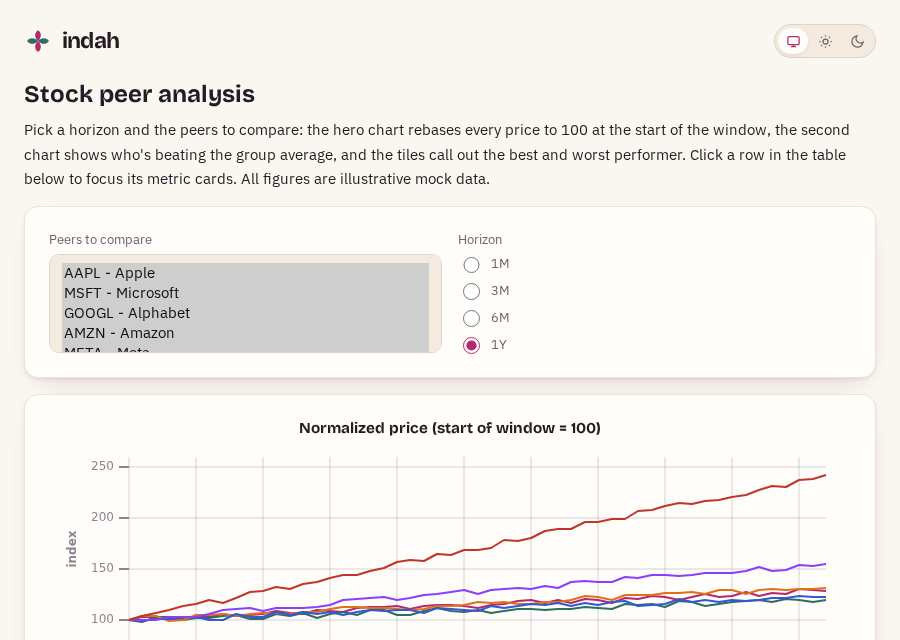 Stock peer analysisPick peers and a horizon; see who's beating the group average.
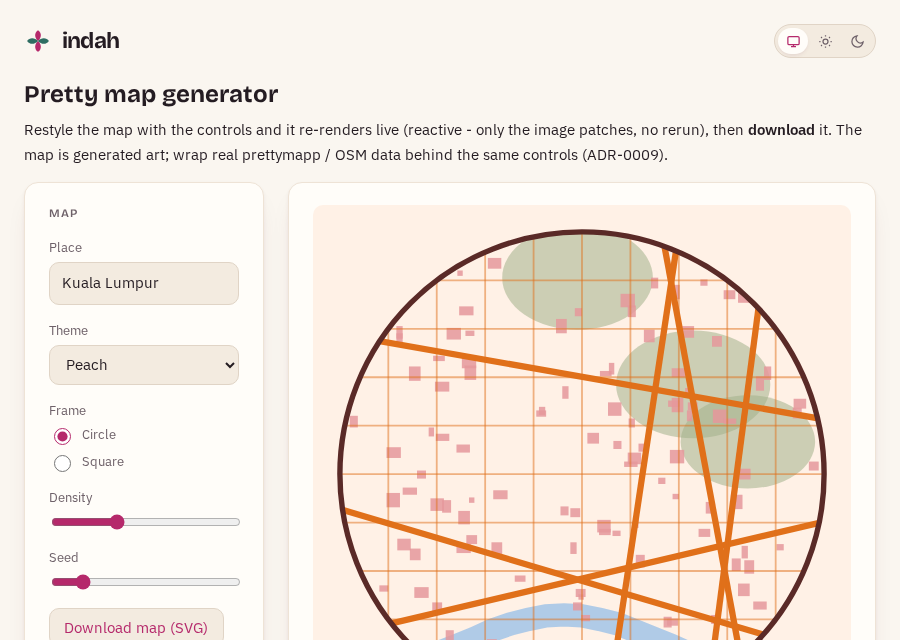 Pretty mapRestyle a generated city map and download it as SVG.
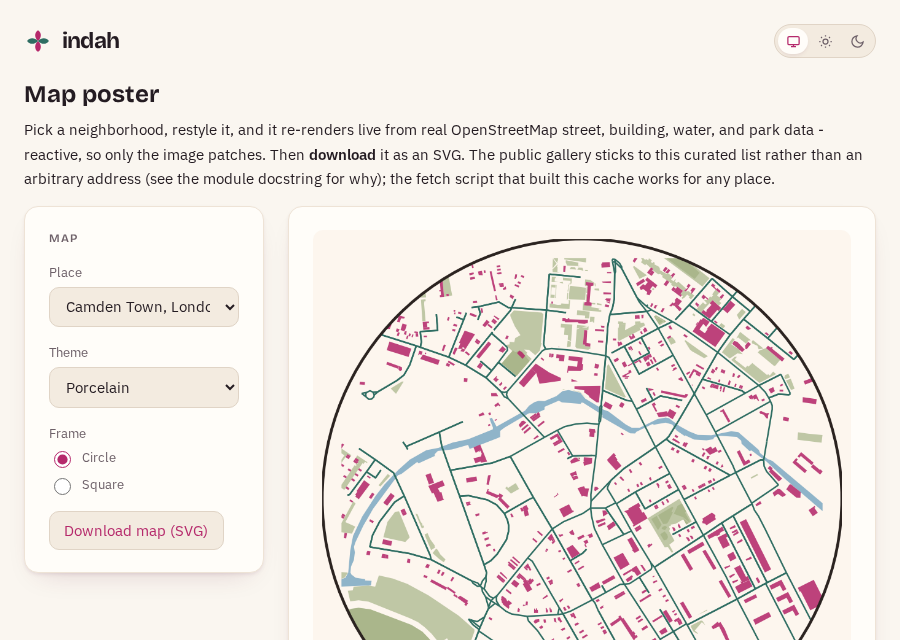 Map posterA real OpenStreetMap neighborhood, restyled as a poster.
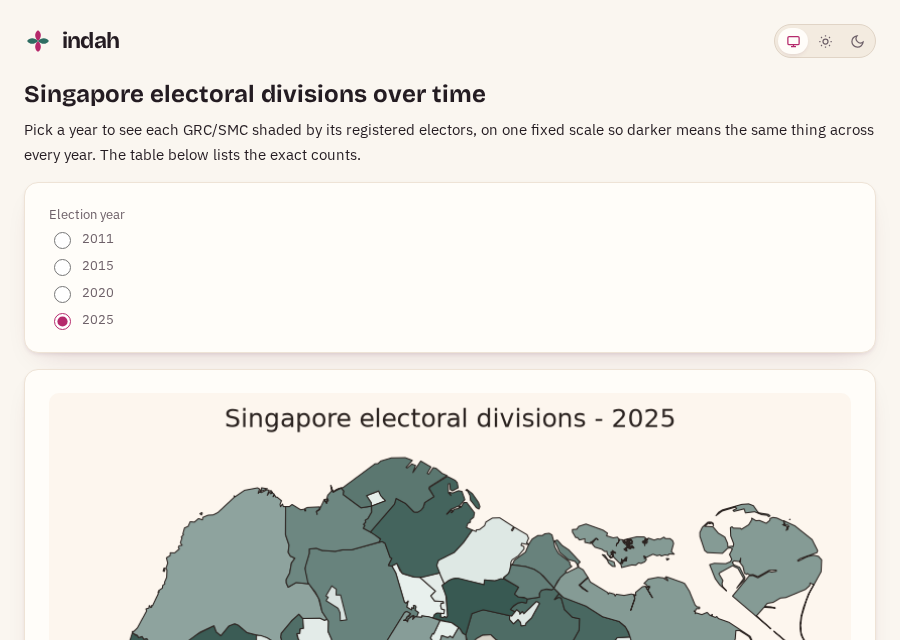 GRC mapSingapore's electoral divisions, shaded by electorate, over 4 elections.🎧Audio analysisSynthesized vowels and instrument notes, streamed into a live spectrogram.
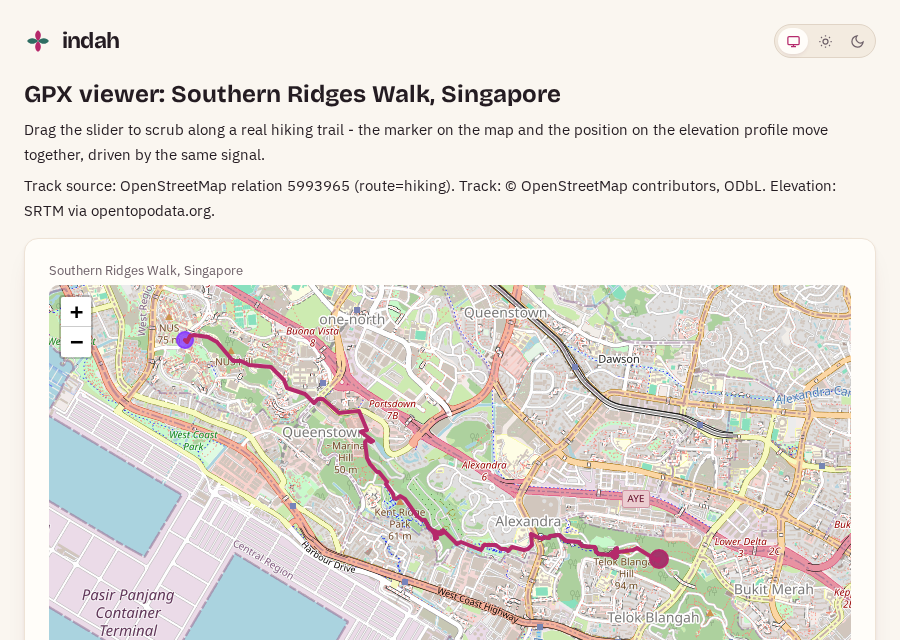 GPX viewerScrub a real hiking trail; the map marker and elevation profile move together.